About us
Resources
Console
ZooProxy provides proxy infrastructure for ecommerce data collection, helping businesses collect pricing and product information from different markets, ecommerce platforms, and target websites. It provides stable network connectivity for ecommerce price monitoring, competitor price tracking, and price data analysis.
99.92% network availability
Free geo-targeting
Average response time < 0.5s
Global resource distribution
Adapting to Frequent Price Changes
Competitors may frequently adjust their prices based on inventory levels, promotions, market demand, or the competitive landscape. The same product may also show different pricing information depending on the platform, region, or time of access.
Scaling the Speed and Volume of Data Collection
Relying solely on manual checks makes it difficult to continuously track a large number of products and competitors. As a result, more ecommerce businesses are using automated data collection and ecommerce price monitoring processes to continuously collect market pricing data.
Significant Price Differences Across Regions
Accessing a website from a single region may not fully reflect pricing conditions in the target market. For businesses conducting cross-market pricing research, obtaining price data from different regions within their target markets is important.
ZooProxy provides proxy infrastructure for ecommerce price monitoring, data collection, and market research. By integrating proxies with your existing data collection tools, you can build price tracking and competitor monitoring workflows based on your business needs.
Cover Multiple Target Markets
For cross-market pricing research, you can select proxy IPs from the relevant regions based on your target markets and collect publicly available product pricing and market information from different countries and regions.
Multiple Proxy Resource Types
Depending on your data collection needs, you can choose proxy solutions such as residential proxies, ISP proxies, and unlimited-bandwidth residential proxies for large-scale data collection.
Support IP Rotation
Depending on your data collection needs, you can adjust the IP rotation frequency to better match tasks such as large-scale ecommerce price monitoring, competitor price tracking, and market pricing research.
Scalable Data Collection
From small-scale competitor price research to large-scale product and market data collection, you can choose the appropriate proxy configuration based on your data volume and access frequency.
Integrate with Existing Tools
ZooProxy is compatible with most data scraping tools on the market, allowing you to continue using your existing automation tools or data analysis platforms without rebuilding your entire workflow. This makes it easier to support ecommerce price monitoring, competitor price tracking, and price data collection within your existing setup.
24/7 Technical Support
A dedicated technical team is online around the clock, responding to proxy issues within minutes, ensuring your competitor price monitoring runs 24/7 without interruption.
Choose a proxy plan that fits your business needs to manage costs while gaining more efficient insights into market price changes. This provides ongoing data support for competitor analysis, pricing adjustments, and promotional strategies.
Residential Proxies
Starting from $0.38 /GB
Buy Now Buy NowISP Proxy
Starting from $1.80 /IP
Buy Now Buy NowIf you're planning to build an automated competitor price monitoring workflow, you can follow the steps below.
Identify Products and Competitors
First, identify the brands, product SKUs, product URLs, and competitors you want to monitor.
Define Target Markets
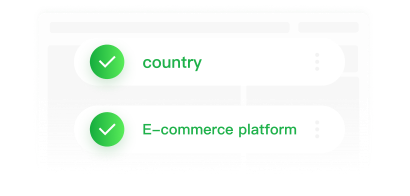
Based on your business needs, identify the countries, regions, and ecommerce platforms you want to monitor.
Choose the Right Proxy
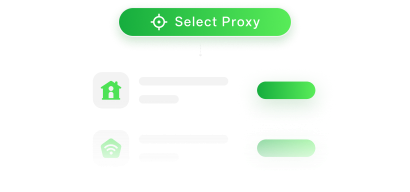
Choose the appropriate proxy type based on your target markets, data volume, and access frequency. Depending on your needs, you can use residential proxies, static ISP proxies, or unlimited residential proxies.
Collect Price Data
Use your own web scrapers, automation programs, or price monitoring tools to access target pages and extract the data you need.
Ecommerce price monitoring is not limited to the price of a single product. Depending on your business needs, you can build monitoring workflows for different types of product and market data.
Product Information
Competitor Prices
Ecommerce price monitoring helps businesses continuously track competitors’ product prices, discounts, and promotions while combining data such as SKUs, URLs, and stock status to analyze pricing across different sales channels. Through competitor price monitoring and competitor price tracking, businesses can compare prices across competitors’ official websites, ecommerce platforms, and retailers, while identifying price differences across countries and regions. By continuously collecting historical price data, businesses can analyze competitor pricing changes and price trends, providing data support for competitor price research, ecommerce price comparisons, and dynamic pricing.
MAP Price Monitoring
MAP (Minimum Advertised Price) is a common concept in brand and retail channel management. MAP price monitoring helps brands identify whether prices across different sales channels fall below the set advertised price while continuously tracking relevant price changes. For brands with multiple resellers and sales channels, automated collection of publicly available pricing information can reduce the workload of manual checks.
Google Shopping Price Monitoring
Google Shopping aggregates a large amount of product and seller information, making it a useful data source for ecommerce price monitoring and pricing research. By monitoring product prices, sellers, and product information on Google Shopping, businesses can gain further insights into:
This section covers common issues you may encounter during use, and you can independently refer to it for assistance in efficiently conducting your business
Ecommerce price monitoring is the process of regularly collecting, comparing, and tracking product prices across ecommerce platforms, brand websites, retailers, and competitors to understand market price changes. Businesses can use price monitoring data for competitor analysis, market research, price comparisons, and pricing strategy research.
First, identify the competitors and target products you want to monitor. An automated program can then regularly access the relevant product pages, collect pricing, product, and seller information, and compare data collected at different times to track price changes.

When collecting data from a large number of products, multiple markets, or different websites, proxies can provide different IP addresses and network endpoints, helping data collection systems establish connections based on the target market and task requirements. Proxies do not perform price analysis themselves; they provide the network infrastructure needed for price data collection.
Start by identifying the products and competitors you want to monitor, then define your target markets and data collection frequency. You can use web scrapers or price monitoring tools to collect pricing data regularly.
Yes. You can select proxies from the target regions based on your data collection needs and access public product pages through the corresponding network environment. However, whether page content and prices actually vary by region depends on how the target platform displays its content.
No single proxy type is suitable for every ecommerce price monitoring task. Residential proxies are suitable for ongoing data collection that requires flexible IP rotation, while static ISP proxies are better suited to scenarios that require relatively stable IP addresses. Unlimited residential proxies can be used for larger-scale data collection, continuous collection, or higher-concurrency tasks. The right choice depends on factors such as the target website, data volume, target regions, collection frequency, and concurrency requirements.
Yes. You can combine web scrapers or automation programs with proxies, data storage, and analytics tools to build a workflow for regular data collection and price change analysis.
Yes. ZooProxy provides proxy infrastructure that can serve as the network layer for ecommerce price scraping and other public web data collection workflows. You can integrate ZooProxy with your own web scrapers, automation programs, or data collection tools.
Use ZooProxy to access proxy resources suited to your target markets and data volume, and integrate price data collection with your existing monitoring and analytics tools.